
The Rise of “Continuous Underwriting”: How AI Monitors Commercial Risk in Real-Time
Commercial insurance has traditionally operated on an annual cycle. A business fills out a long, exhaustive questionnaire detailing their assets, employee counts, and safety protocols. The underwriter evaluates the risk profile, prices the policy, locks it in for 365 days, and walks away.
This model is fundamentally flawed. A business’s risk environment shifts constantly. A company might double its cyber attack surface, change shipping routes, or onboard a fleet of new delivery drivers within a few short months—leaving them either dangerously underinsured or overpaying for stale parameters.
Enter Continuous Underwriting: a shift powered by AI and connected cloud infrastructure that continuously monitors commercial operations in real-time.
How Continuous Insurance Engines Function
Instead of relying on isolated annual audits, underwriters tap directly into active operational data feeds via authorized APIs:
- Fleet Telematics: Tracking real-time driver behaviors, truck speeds, and route safety to adjust transit policy pricing dynamically.
- Live Cyber Attack Footprints: Monitoring enterprise server nodes and security vulnerabilities instantly, alerting management to patch errors to maintain premium baselines.
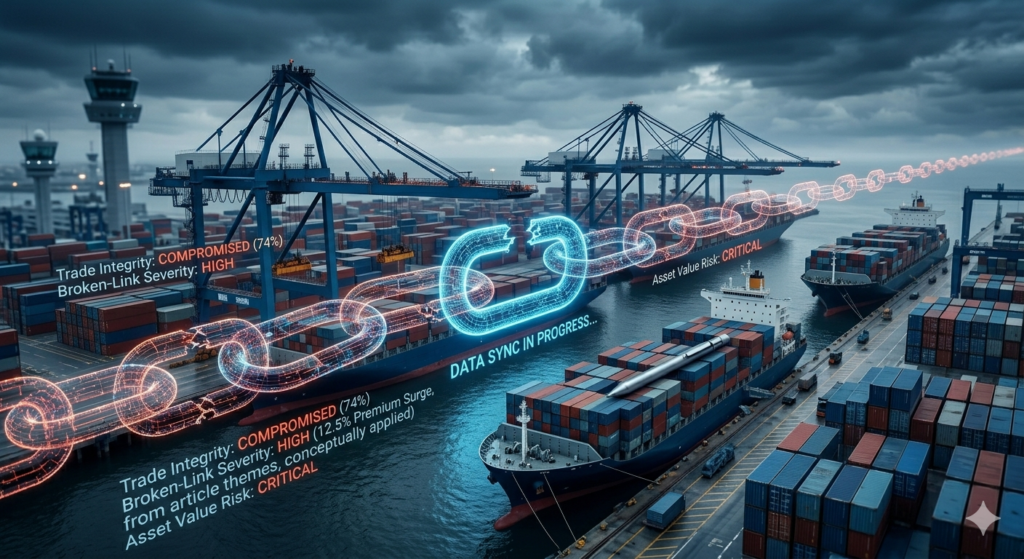
- Supply Chain Logs: Adapting inventory coverage parameters as shipments move into volatile geographic shipping corridors.
The Payoff: Responsive Protection
This structure turns insurance from a fixed, passive overhead cost into an active, responsive operational metric. Businesses that proactively minimize their risk footprints see instant premium reductions, while insurers limit catastrophic exposures before they turn into historic corporate claims.
The Rise of “Continuous Underwriting”: How AI Monitors Commercial Risk in Real-Time
I remember sitting with a commercial property manager a couple of years ago. We were going through his annual insurance renewal, and he was frustrated. “I’ve spent the last six months upgrading our fire suppression systems and installing smart leak detectors,” he told me. “But my premium didn’t budge. My insurer is still charging me based on the ‘snapshot’ of the building they took three years ago.”
He was right, and it highlighted the biggest flaw in the traditional insurance model: The Snapshot Fallacy. For decades, underwriting was a point-in-time event. You bought a policy, the insurer assessed your risk once, and then they essentially “forgot” about you until the renewal date rolled around. If you became a safer business during that year, you didn’t see the benefit. If you became a riskier one, the insurer didn’t know until it was too late.
But the script is flipping. We are moving into the era of Continuous Underwriting—a process where AI and IoT (Internet of Things) devices don’t just assess your risk once; they monitor it every single second of every single day.
The End of the “Set and Forget” Policy
Continuous underwriting transforms the relationship between a policyholder and a carrier from an annual interrogation into an ongoing collaboration. Thanks to AI-powered predictive analytics and a flood of real-time data from telematics, smart sensors, and even public data streams, insurers now have a dynamic window into the actual health of a business.
Think of it like the difference between a doctor seeing you for a 5-minute physical once a year versus wearing a heart monitor that alerts them to trouble before you even feel a symptom. That is what AI is doing for commercial risk.
How It Works: The Invisible Monitoring
The “magic” behind this isn’t magic at all; it’s massive data aggregation. Here is how the AI is actually watching the risk:
- IoT and Smart Sensors: In commercial properties, sensors now monitor humidity, temperature, and vibration in real-time. If a pipe starts to leak or a freezer unit’s motor begins to fail, the AI detects the anomaly and alerts the business owner—and the insurer—to fix it before it becomes a claim.
- External Data Streams: AI doesn’t just look at internal data. It monitors geopolitical risks, weather patterns, and supply chain disruptions. If a port you rely on is suddenly blocked, the AI can adjust risk profiles for your cargo coverage instantly.
- Cyber Posture Scanning: For cyber insurance, “outside-in” scans are the new normal. AI continuously probes an organization’s network perimeter for new vulnerabilities, flagging them for the IT team before a hacker can exploit them.
Why This Matters to You
1. Pricing Fairness: If you invest in your own safety (better security, safer fleets, more resilient tech), the AI reflects that in your risk score almost immediately. You’re no longer waiting 12 months for a “renewal discount.”
2. Proactive Prevention: The system is designed to trigger alerts. If a sensor reports a potential hazard, you get a notification. You get the chance to intervene, and your insurer gets a reduced loss ratio. It’s a win-win.
3. Seamless Renewals: Because the insurer is constantly updated on your risk profile, the “annual renewal” becomes a formality rather than a painful, manual process of re-filling out endless forms.
Common Challenges to Keep in Mind
While this sounds like a dream, it comes with a few “real-world” hurdles:
- The Privacy Hurdle: Continuous monitoring requires data. A lot of it. Businesses need to be comfortable with the level of visibility they grant their carriers, and insurers need to be airtight with their data security.
- False Positives: If the AI is too sensitive, it can trigger “crying wolf” alerts that annoy business owners. The calibration of these algorithms is currently the biggest area of growth and struggle for carriers.
- The Human Oversight Requirement: Just because the machine is “always on” doesn’t mean humans should be “always off.” A machine can flag a risk, but it takes a human to understand the context of a business’s operations.
Final Thoughts
The transition to continuous underwriting is the biggest shift in insurance since the invention of the actuarial table. It moves the industry away from “paying for bad luck” toward “partnering for good outcomes.” As a business owner, if your current insurer is still treating you like a snapshot, it might be time to ask if they have the tools to actually protect you, or if they’re just waiting for you to file a claim.