The Supply Chain Trap: Why Standard Property & Casualty (P&C) Insurance Isn’t Enough Anymore
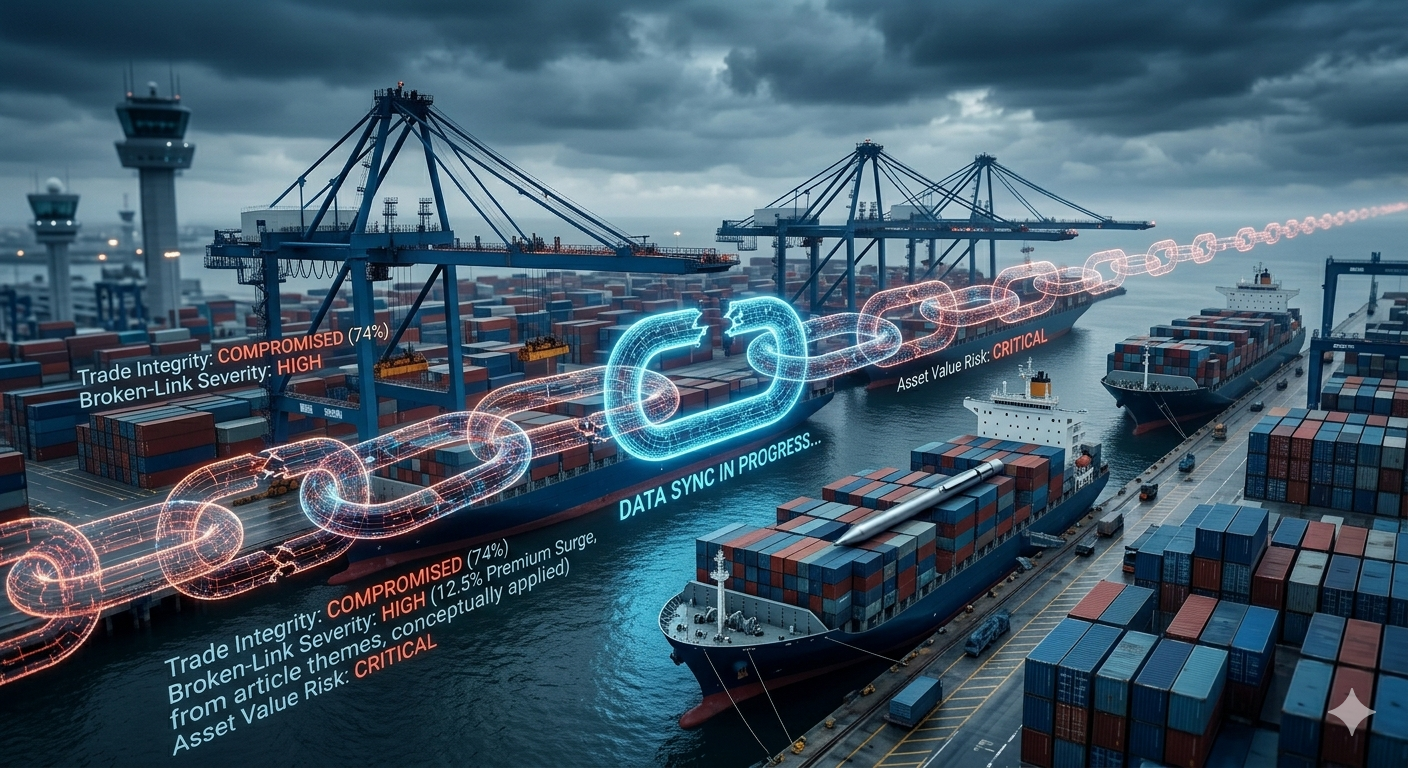
I recently sat down with a logistics manager who felt invincible. “We’re fully covered,” he told me, pointing to his company’s massive Property & Casualty (P&C) insurance policy. “If our warehouse burns down or a truck crashes, we’re set.” He was right—for the old world. But in 2026, the biggest threats to his business don’t involve fire or collisions. They involve a port strike on the other side of the world, a cyberattack on a third-party software provider, or a drought that chokes a major canal. And guess what? His P&C policy didn’t cover a dime of that.
This is the Supply Chain Trap. For decades, we built our businesses on “just-in-time” delivery and global interconnectivity. Our insurance policies, however, remained rooted in “physical damage” triggers. It’s like having a high-tech car but using an analog map from 1985 to navigate. You’re going to get lost, and when you do, you’ll find out the hard way that your insurance doesn’t cover “being lost.”
The “Physical Damage” Blindspot
At the heart of most Business Interruption (BI) insurance is a simple requirement: Physical Loss or Damage. To trigger a payout, your facility usually has to be physically damaged by an insured peril (like a fire, windstorm, or earthquake). But look at the biggest disruptions of the last few years: cyber outages, transport network failures, political instability, and pandemic-related shutdowns. None of these involved physical damage to your property.
If your supplier goes bankrupt or a regional trade barrier stops your goods from moving, your P&C policy likely sees that as a “business decision” or an “operational risk,” not an insurable loss. You’re left holding the bag while your revenue dries up.
Why Your Policy Needs an Upgrade
In a world of fragmented trade blocs and climate-driven logistical bottlenecks, “last year’s policy” is almost certainly under-insuring your actual risks. Here is where the gaps are widening:
- Contingent Business Interruption (CBI) Limits: Many standard policies have narrow CBI coverage that only extends to first-tier suppliers. But modern supply chains are deep—you rely on 2nd and 3rd-tier suppliers you might not even know. If they fail, you’re exposed.
- Exclusion of “Soft” Risks: Cyberattacks, data breaches, and telecom outages are the biggest threats to supply chain resilience today, yet they are often excluded from standard P&C property forms.
- Inflation Sensitivity: BI values are highly sensitive to rising logistics and energy costs. If you roll forward your “declared values” from last year without accounting for post-loss recovery costs (like expensive expedited shipping to make up for lost time), you will be drastically under-insured during a crisis.
Building Your “Resilience” Portfolio
Step 1: Map your “hidden” dependencies. You can’t insure what you don’t see. Work with your operations team to identify critical single-source suppliers and key logistical nodes.
Step 2: Move beyond “Declared Values.” Work with your broker to model real-world recovery scenarios. What would it cost to source parts from an alternative supplier at triple the price if your main node goes dark? That’s the number you need to be insuring.
Step 3: Explore “Parametric” Solutions. Unlike traditional insurance, parametric insurance pays out based on a pre-defined trigger (e.g., a port closure of more than 5 days) rather than waiting for a forensic loss adjustment. It’s faster, cleaner, and covers non-physical risks.
Common Mistakes That Lead to Underinsurance
- Assuming “All Risk” means “All Causes”: It doesn’t. “All Risk” just means that if a peril isn’t explicitly excluded, it’s covered—but most P&C forms explicitly exclude the “weird” stuff that actually causes modern supply chain failures.
- Neglecting the “Recovery Period”: Standard policies often assume a “reasonable” time to recover. In a global logistics crisis, “reasonable” could be months, not weeks. Check your indemnity period.
- Siloed Risk Management: If your finance team is managing the insurance and your operations team is managing the suppliers, and they don’t talk, you have a massive insurance gap.
Final Thoughts
The days of relying on a standard P&C policy to safeguard your entire business model are over. Resilience isn’t just about having backup inventory; it’s about having a financial safety net that understands how your business actually moves through the world. Take the time to audit your gaps now, before the next “minor” disruption becomes a major financial blow.